
Hair fall is something almost everyone experiences from time to time. Finding a few strands on your pillow, comb, or shower floor can be completely normal. But when hair loss becomes noticeably higher than usual, it may be a sign that your hair and scalp need attention.
Ignoring excessive hair fall for too long can make it harder to identify the underlying cause and manage the problem effectively.
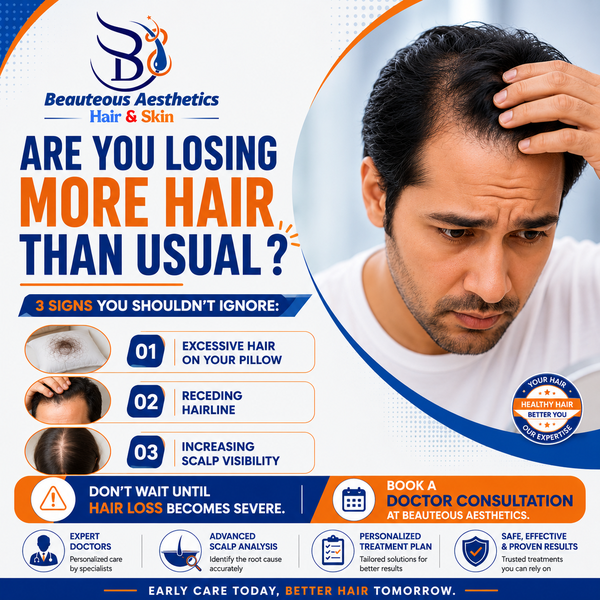
So, how do you know when normal hair shedding becomes excessive hair loss? Here are three important warning signs you should not ignore.
Recognizing these early signs allows you to address hair loss before it becomes advanced or permanent.
Do you regularly notice a significant amount of hair on your pillow after waking up?
A few strands are generally nothing to worry about. However, if you consistently notice increased hair shedding on your pillow, bedsheet, clothes, or while washing your hair, it may indicate increased hair shedding.
Hair fall can occur due to factors like:
A gradually receding hairline is another common sign of hair loss, particularly in men.
You may notice that the hairline around your temples is slowly moving backward or that the forehead appears more prominent than before.
A receding hairline can be associated with androgenetic alopecia, commonly known as male pattern hair loss. Genetics and hormonal sensitivity play an important role in this type of hair loss.
Early evaluation can help determine whether the hairline is actually receding and how extensive the hair loss may be.
Another warning sign is noticing more of your scalp through your hair.
You may notice:
Increasing scalp visibility can indicate that hair density is decreasing. Sometimes hair loss happens gradually, so you may not notice the change immediately.
Hair loss does not have one single cause. Different people can experience hair loss for completely different reasons. For example, temporary hair shedding may occur after stress, illness, nutritional problems, or hormonal changes, while progressive thinning can be associated with genetic hair loss.
That's why identifying the underlying cause is an important first step. A professional scalp and hair assessment evaluates:
One of the biggest mistakes people make is waiting until significant hair loss has already occurred before seeking professional advice.
Early intervention doesn't necessarily mean you need a hair transplant or advanced procedure. The right treatment depends entirely on the cause and stage.
There is no universal treatment that works for every type of hair loss. Medical management, scalp therapies (GFC, PRP, Exosomes), or surgical options are chosen specifically for your condition.
At Beautious Aesthetics Hair & Skin Clinic, the focus is always on accurate diagnosis and appropriate medical guidance rather than simply choosing a treatment because it is trending.
Consider seeking professional advice if you notice any of the following symptoms for several weeks:
A doctor can assess your condition and help determine whether your hair loss is temporary, progressive, or related to an underlying medical issue.
Hair loss can be worrying, especially when you start noticing visible changes in your hairline or scalp. But don't panic—and don't ignore it either.
If you're asking yourself, “Why am I losing more hair than usual?”, that's a good reason to get your scalp and hair evaluated by a qualified doctor.
Excessive hair on your pillow, a receding hairline, and increasing scalp visibility are three signs worth paying attention to.
The earlier you understand the cause of your hair loss, the sooner you can discuss appropriate options with a doctor. Take the first step toward understanding your hair loss at Beautious Aesthetics.